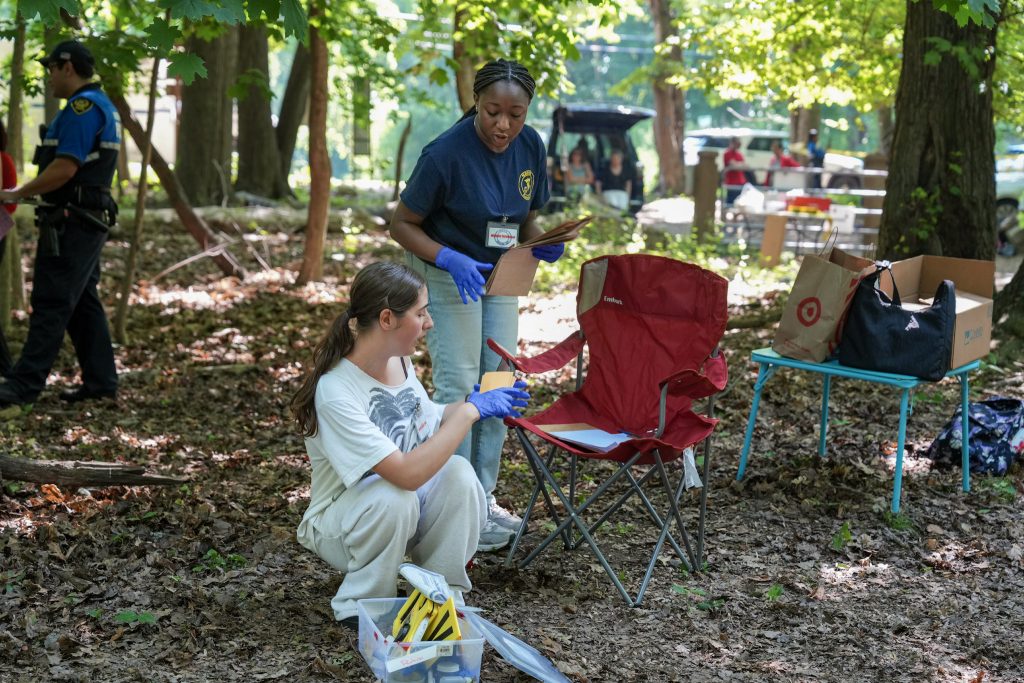
 New Rochelle High School Forensics Teacher Scott Rubins gave his final crime scene final exam this year as he readies for retirement. For the exam, more than 200 New Rochelle High School juniors and seniors looked for clues to solve crimes on May 19. Cohorts of 40 students had less than an hour to search for, observe, and collect evidence as forensic examiners, forensic scientists, and crime scene investigators. A New Rochelle Police Department officer served as a first responder at the crime scene and assisted teachers in evaluating the students’ work.
The students were the last of more than 4,000 who have taken Mr. Rubins’ exam. Some of them have gone on to careers working in forensics labs, including the Westchester Forensics Lab, the NYPD Crime Lab, and the Harris County Institute of Forensic Science in Texas. Still others have been inspired to enter law enforcement careers after taking the course, working for the New Rochelle Police Department, New York City Police Department, Putnam County Sheriff’s Office, the federal Department of Homeland Security, the FBI, the Secret Service, and New York State Children’s Investigative Services.
“It’s hard to believe more than 26 years have passed since I first said, ‘I have a small idea.’ What started as a simple concept has evolved into a huge event and my favorite day of the school year,” said Rubins. “I began sharing the vision for this project on the very first day of class, and that momentum builds until the day finally arrives. For my students, this experience has become a true rite of passage, one that resonates so deeply that many alumni return year after year to volunteer their time and support. There is nothing quite like the feeling of watching the students’ hard work come to fruition. I am incredibly grateful to have had the opportunity to provide this opportunity for them over the last two and a half decades.”
Each year, 20-25 former students return to the scene of the crime to help set up the crime scenes, restock them between classes, and help this year’s students managed the logistics of their investigations in the woods.
After processing the crime scene, students taking the final exam examined and evaluated their evidence in a laboratory before presenting their cases courtroom-style, with photos and evidence, an explanation of their rationale in processing the scene, their laboratory request documents, and their conclusions. The grade is up to the judge (aka Mr. Rubins).